






Booker Omole is the General Secretary of the Communist Party Marxist Kenya, a Marxist Leninist and Maoist theoretician and organiser rooted in the struggles of the Kenyan working class and poor peasantry. He has played a leading role in rebuilding the communist movement in Kenya, advancing the line of the National Democratic Revolution, and spearheading ideological education, mass organisation, and anti imperialist mobilisation. Known for his uncompromising stance against neocolonial domination and revisionism, he has been at the forefront of political resistance, facing state repression while continuing to organise workers, youth, and progressive forces towards revolutionary transformation.
1. History, formation, and ideological stance of the party
The Communist Party Marxist Kenya was born out of necessity, not convenience. It emerged from the concrete conditions of Kenyan society, a society chained by neocolonial domination, suffocated by comprador capitalism, and scarred by the unfinished tasks of national liberation. Our formation is rooted in struggle, in the long arc from the anti colonial resistance of the Mau Mau to the betrayed independence of 1963.
Our emergence is also inseparable from the ideological rupture with the Communist Party of Kenya. That split was not a matter of personalities. It was a question of line. It was a question of revolution or reform, of Marxism or revisionism. Within that struggle, a reactionary current we identified as the “Gang of Two”, composed of Mwandawiro Mganga and Benedict Wachira, emerged as the organisational expression of opportunism, advancing a line of class collaboration, parliamentary cretinism, and capitulation to bourgeois politics. We broke decisively from this deviation. We refused liquidation. We refused surrender. We chose the path of rebuilding a genuine revolutionary vanguard rooted in the working class.
We are guided by Marxism Leninism and enriched by Mao Zedong Thought. We uphold historical materialism as our compass and class struggle as our method. We do not deal in abstractions. We deal in the living contradictions of Kenyan society, where imperialism, feudal remnants, and bureaucratic capitalism form a reactionary bloc against the people.
Our strategic line is clear. Kenya requires a National Democratic Revolution as a stage towards socialism. This revolution must be led by the working class in alliance with the peasantry, the youth, and all oppressed strata. We reject revisionism. We reject opportunism. We stand for revolutionary transformation.
2. Condition of the working class in Kenya
The Kenyan working class is under siege, but it must be understood in its full material reality. It remains relatively thin, not by accident, but by design. Imperialist domination has stunted industrial development, reduced productive capacity, and confined the economy to dependency. Industries are weak, fragmented, or altogether absent. The result is a working class that is numerically constrained, while the vast majority of the people, more than seventy per cent, are pushed into the rural hinterland, into conditions of backwardness imposed and maintained by the system.
In the countryside, exploitation takes layered and brutal forms. The rural proletariat and poor peasantry are subjected not only to market exploitation, but to pre capitalist relations that persist under neocolonialism. Usury chains the peasant to cycles of debt. Rent in kind strips the harvest before it feeds the family. Rent in labour extracts unpaid toil. Rent in money tightens the grip of landlords and local elites. The peasant tills, but does not own. Produces, but does not control. Lives, but does not advance.
Yet within this reality lies a decisive force. The peasantry, vast and enduring, constitutes the physical force of the revolution. It is the reservoir of energy, the great mass that, when organised and led by the working class, can sweep away the old order. Without the peasantry, there is no revolution. With the peasantry, armed with consciousness and organisation, there is no force that can stand in the way.
Class struggle is not a theory in Kenya. It is a living, breathing reality. It unfolds in the factories, in the plantations, in the streets, and in the villages. Workers are rising in strikes against low wages, against precarious conditions, against the theft of their labour. From industrial actions to spontaneous walkouts, the working class is asserting itself, even under conditions of repression and fragmentation.
In the countryside, the contradictions are sharpening. Peasants are resisting land grabbing, resisting displacement, resisting the domination of landlords and agribusiness. Localised uprisings, community resistance, and organised struggles over land and livelihood are becoming more frequent. The anger is deep. The patience is wearing thin.
These struggles may appear scattered, but they are connected by a common thread. They express the same fundamental contradiction between the masses and the system that exploits them. The task before revolutionaries is clear. To unite these struggles. To give them direction. To transform scattered resistance into a conscious, organised force capable of advancing the National Democratic Revolution.
The most pressing issues remain unemployment, casualisation of labour, the rising cost of living, land dispossession, and the erosion of social services. Health and education have been commodified. Housing is unaffordable. Hunger is no longer an exception. It is becoming the norm.
Politically, the masses are confronting a crisis of representation. Bourgeois parties offer no solution. They recycle promises while deepening exploitation. The people are searching. They are questioning. They are learning through struggle that the problem is not this or that politician. The problem is the system itself.
3. Status of the working class movement and labour unions
The trade union movement in Kenya has a militant history, written in sacrifice and struggle, but today it is weighed down by bureaucratisation and class collaboration. A layer of labour aristocrats has emerged within the union leadership, divorced from the rank and file, insulated by privileges, and tied materially and politically to the state and to capital. This stratum speaks the language of workers, but acts in the interests of compromise. It fears struggle. It fears disruption. It fears the independent power of the masses.
Many union leaders have been absorbed into the machinery of the state or co opted by capital. Instead of mobilising workers, they pacify them. Instead of organising strikes, they negotiate retreat. What we witness is not simply weakness, but a contradiction within the movement itself, between the fighting instincts of the workers and the conservative tendencies of sections of the leadership.
Unions exist, but their strength is uneven. In some sectors they remain active, but in many others they are detached from the rank and file. Workers are often left to fight alone, to organise spontaneously, to resist without structure or continuity.
Yet the story does not end there. Beneath this layer of opportunism, the real movement of the working class continues to develop. Our party intervenes precisely at this level. We go to the workers, not as observers, but as organisers. We build from below.
At the Mombasa waterfront, among port and dock workers, we have been engaged in patient and persistent work, organising against casualisation, against exploitation by shipping monopolies, and against the brutal conditions imposed on those who handle the lifeline of the economy. There, the struggle is sharp, because the worker stands directly against imperialist trade networks and their local agents.
Among workers in the Export Processing Zones, the conditions are even more severe. These zones are enclaves of super exploitation, where labour rights are suppressed, wages are kept at bare subsistence, and repression is constant. Here, we organise quietly but firmly, building consciousness, linking immediate struggles over wages and conditions to the broader political struggle against imperialism and neocolonialism.
Our approach is not to abandon the unions, but to transform them. We go to the workers. We organise from below. We build rank and file committees. We expose betrayal where it exists. We unite where unity serves the struggle. We insist, again and again, that unions must return to their class character as organs of struggle, not instruments of compromise.
4. State repression and revolutionary resistance
Our party has faced arrests, harassment, surveillance, and sustained physical attacks. This is not accidental. It is systematic. The state fears organisation. It fears clarity. It fears a people who understand their power and begin to act upon it.
I speak not in abstraction, but from lived experience. There have been direct attempts on my life, including an attack at my own home, an act meant to intimidate and silence. There was also a targeted assault on a party vehicle, an attack not only on property but on the collective work and movement it represents. Most recently, I was abducted, subjected to torture, and released as a warning. But such actions do not produce fear. They produce clarity. They expose the true nature of the state as an instrument of class rule, not a neutral arbiter.
At the local level, repression is often carried out by known anti communist elements within the security apparatus. The Officer Commanding Station of Mlolongo, Peter Mugambi, has consistently acted as a point of persecution against our comrades, using harassment, arbitrary arrests, and intimidation to disrupt organising efforts. These are not isolated incidents. They form part of a broader pattern in which the machinery of the state is deployed to suppress revolutionary activity while protecting the interests of capital and imperialism.
Our comrades have been targeted because we speak the truth without fear. We organise the poor. We expose imperialism. We refuse to bow.
But repression does not weaken us. It steels us. Each attack reveals the class nature of the state more clearly to the masses. Each act of violence strips away the illusion of neutrality. Each arrest, each beating, each act of intimidation deepens political consciousness and widens the circle of resistance.
Revolutionaries are not forged in comfort. They are forged in struggle. And in Kenya today, that struggle is intensifying.
To our comrades in Anatolia and across the world, solidarity must be active. Raise our struggles in your organisations. Build international campaigns. Expose repression. Exchange experiences. Strengthen proletarian internationalism not as a slogan, but as a living practice. An injury to one is an injury to all.
5. Imperialism in East Africa and Kenya
Imperialism in East Africa did not end with the lowering of colonial flags. It simply changed form. Yesterday it ruled through governors. Today it rules through debt, military agreements, intelligence networks, multinational corporations, and local comprador elites.
Kenya is a key node in this system. It hosts significant foreign military presence through formal agreements and strategic installations linked to imperialist powers. These arrangements are presented as “security cooperation”, yet in essence they embed Kenya deeper into global military architectures that serve external strategic interests rather than the sovereignty of the people.
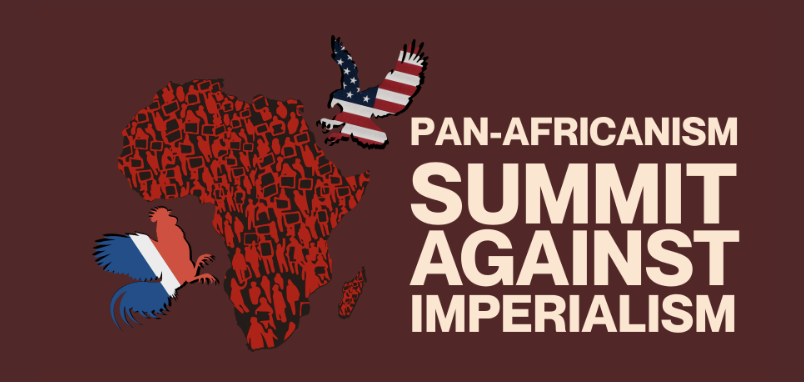
At the same time, there are growing preparations and diplomatic manoeuvres around high level imperialist and neocolonial engagements, including the anticipated Africa France summit in Nairobi. Such gatherings are not neutral diplomatic events. They are arenas for reorganising influence, renewing economic dependency, and reinforcing military and political alignment between African ruling classes and former colonial powers. Closely linked to this is the expansion of new military and security cooperation frameworks between France and Kenya, which deepen intelligence sharing, training, and operational coordination under the banner of counter terrorism and regional stability.
Across East Africa, the ruling classes are increasingly integrated into a shared neocolonial security architecture. Intelligence is exchanged between states. Security forces coordinate across borders. Repressive methods are shared and replicated. In practice, this has meant that protest movements, strikes, and popular uprisings are met not only with domestic repression, but with coordinated regional security responses. The oppressed peoples of one country are increasingly treated as a regional threat by interconnected regimes acting in unison to defend the system.
Kenya’s economy reflects the same dependent structure. The so called industrial zones, particularly in Nairobi’s industrial area, do not function as genuine centres of national industrialisation. Instead, they are increasingly dominated by warehouses, distribution centres, and import oriented storage networks for foreign goods. This reflects a deeper reality. Capitalist development itself has been stunted and distorted by imperialism. Rather than building a self sustaining industrial base, the economy is structured around consumption, importation, and dependency.
In the countryside, landlordism persists and deepens under neocolonial conditions. Large tracts of land are controlled by a narrow elite, while the majority are pushed into precarious forms of survival. Usury dominates rural life. Peasants are trapped in cycles of debt, forced to borrow at exploitative rates, repaying through harvests, labour, or further indebtedness. This system of super exploitation combines remnants of semi feudal relations with modern financial domination, binding the rural masses into layers of oppression.
It is important to understand that even capitalist development in Kenya has been systematically hindered by imperialism. Rather than allowing the emergence of an independent national bourgeoisie capable of industrial transformation, imperialism has enforced dependency, fragmented production, and redirected accumulation into trade, real estate, and financial speculation.
Regionally, these contradictions are sharpened by ongoing conflicts such as the war in Sudan. This war is not simply internal. It is entangled with regional rivalries, external interventions, and imperialist competition over strategic influence, resources, and trade corridors. The suffering of the Sudanese people is thus intensified by a broader system in which external and internal reactionary forces interact to prolong instability for political and economic gain.
In this context, East Africa is not a zone of sovereign development. It is a contested space of imperialist penetration, neocolonial coordination, and popular resistance. The task of the revolutionary movement is to expose these structures clearly, and to organise the masses to break from them entirely.
6. Developments in the Western Sahel
The events in Burkina Faso, Mali, and Niger reflect a deep crisis of imperialist domination. The masses, particularly the youth and sections of the military, are rejecting the old order tied to foreign control.
These developments express a powerful affirmation of sovereignty, dignity, and control over national resources. The Communist Party Marxist Kenya recognises and supports these ruptures as acts of national assertion against imperialist domination, and as expressions of patriotic resistance from below and above. At the same time, we emphasise that the struggle cannot remain at the level of political realignment alone. It must advance towards a qualitative transformation of society, where the working class and poor peasantry take strategic leadership, and where the struggle moves from defensive assertion to offensive revolutionary rupture aimed at socialism.
Without clear revolutionary leadership rooted in the working class and peasantry, there is a danger of deviation, where new ruling strata may replace old ones without fundamentally transforming the relations of production. Sovereignty without social transformation remains incomplete. Liberation without socialism remains fragile.
We also note that imperialism, having suffered serious setbacks and political humiliation in parts of the Sahel, is now attempting to reconsolidate its influence elsewhere on the continent, particularly in East Africa. This includes intensified diplomatic and military repositioning, most visibly through initiatives such as the Africa France summit planned in Nairobi, and the deepening of military and security cooperation frameworks between Paris and Nairobi. These developments represent an attempt to reassert strategic influence, rebuild fractured alliances, and stabilise declining imperialist authority through new forms of partnership with local ruling classes.
In this context, the task of revolutionaries in East Africa becomes sharper and more urgent. The advances in the Sahel must be studied, defended, and developed further, but also surpassed through higher levels of organisation and class struggle. The Communist Party Marxist Kenya maintains that genuine sovereignty can only be secured through the strategic offensive of the working class, the mobilisation of the peasantry as a decisive force, and the building of a revolutionary path towards socialism.
We observe these struggles with both solidarity and critical clarity. Anti imperialism must be inseparably linked to class struggle. Otherwise, it remains partial, reversible, and vulnerable to new forms of domination.
Talk about the pacifism of anti war movements in the imperialist countries, talk about the on going world war three according to our analysis mainly the Iran , Palestine, Ukraine, talk the South China Sea, talk Taiwan front, talk about the imperialist wars in Africa.
7. Crisis of imperialism and international solidarity
Imperialism is in crisis, but it is not collapsing on its own. It is becoming more aggressive precisely because its global dominance is being challenged. It wages wars, imposes sanctions, engineers coups, and intensifies exploitation in order to delay its decline and reassert control over a fragmented but resisting world system.
We are living through a period that bears the characteristics of a generalized imperialist confrontation, a form of developing global war expressed through multiple theatres. In our analysis, this includes the ongoing wars in Palestine, where a colonial settler project is sustained through direct military violence; the confrontation involving Iran, where sanctions, covert operations, and military threats form part of a prolonged strategy of destabilisation; and the escalating tensions in East Asia, including the South China Sea and Taiwan, where military encirclement, naval deployments, and competing strategic claims reflect sharpening imperialist pressure and rivalry.
On the African continent, multiple wars and militarised conflicts continue to be shaped and prolonged by external interests and internal ruling class alliances. From Sudan to the Sahel to the Horn of Africa, these conflicts are not isolated. They are interconnected expressions of a global system in crisis, where imperialist powers compete for strategic corridors, resources, and political influence, often through proxy forces and local comprador regimes.
On the question of Ukraine, our position is that this is not an inter imperialist war in essence, but a proxy war driven by NATO expansion and Western imperialist encirclement against the Russian state. It reflects a broader strategy of geopolitical containment and military pressure, with Ukraine functioning as the immediate battleground of this confrontation. At the same time, we recognise that the working class in all countries involved bears the burden of this war, and that their interests are not represented by the ruling classes on any side.
Within the imperialist countries themselves, much of the dominant anti war movement is marked by pacifism and moral appeal rather than materialist analysis and organised political struggle. While these movements express genuine opposition to war, they often avoid confronting the class character of imperialism. They call for peace without dismantling the system that produces war. As a result, they are unable to transform mass sentiment into organised power capable of stopping imperialist aggression. Without a revolutionary perspective, pacifism becomes a pressure valve rather than a weapon of struggle.
The Communist Party Marxist Kenya holds that imperialism cannot be reformed or morally restrained. It must be defeated through organised struggle of the working class and oppressed peoples of the world. The path forward lies in building strong revolutionary movements in every country, rooted in the masses, disciplined in organisation, and clear in ideology.
International solidarity must therefore be organised, coordinated, and principled. It must go beyond statements, beyond symbolic gestures, and develop into joint action, shared struggle, and unified fronts against imperialism.
We must connect struggles. Workers in Africa, in the Middle East, in Europe, in Asia, and in Latin America share a common enemy. When we recognise this material unity, and when we act upon it in organised form, the balance of forces begins to shift.
The crisis of imperialism is global. The response must be equally global, conscious, and revolutionary.
8. Final remarks
History is not written by spectators. It is written by those who struggle.
Kenya stands at a crossroads. Africa stands at a crossroads. The world stands at a crossroads.
We say this with conviction. The masses are not defeated. They are rising. They are learning. They are organising.
We extend our militant solidarity to the workers and poor in Turkey, to the factory floors, to the docks, to the construction sites, to the youth in the streets who refuse silence in the face of exploitation and repression. We recognise in your struggles our own struggles. Different geographies, one class enemy.
We honour the memory of Bekir Kilerci, who lives on in the continuity of struggle. The truth is not only what was done to him, but the path that continues beyond him, carried forward by those who refuse surrender. We walk that same road, alongside the revolutionary memory of Mahir, İbo, Deniz, alongside Fidel and Che, alongside the children of Palestine throwing stones at empire, alongside the workers of the Soviet experience, alongside the Paris Communards who showed that even the sky can be seized by the working class. We walk with the weight and responsibility of history upon our shoulders.
As it is said in your revolutionary tradition, those who cannot risk fighting for their own ideals will end up living under the ideals of others.
The future does not belong to imperialism. It belongs to the working class and the oppressed peoples of the world.
Forward ever. Victory is certain.