







By Booker Omole, General Secretary of the Communist Party Marxist Kenya
Comrades, workers, peasants, and all oppressed people of Kenya
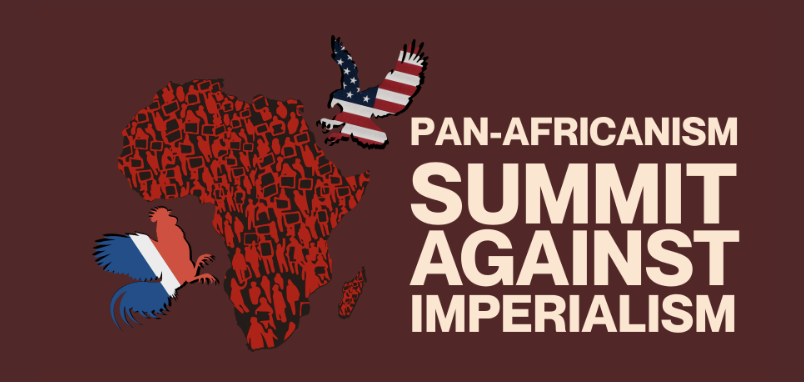
The struggle against Zionist expansion in Kenya is inseparable from the global struggle of the oppressed against imperialism.
We face a new front of imperialist and Zionist aggression on our soil. History, which the imperialists and their local collaborators would have us forget, is repeating itself. Once, in the year 1903, the British colonialists sought to manipulate a desperate Jewish population by offering them land in what was then the Uasin Gishu Plateau of Kenya. This was presented as a solution to the horrors of the Kishinev Pogrom and the waves of persecution that had left hundreds of Jews dead and thousands homeless. The British framed this as a humanitarian offer, yet it was, in reality, a calculated move to extend their colonial control, to create new settlements that would serve imperial interests, and to further entrench the logic of land dispossession. That scheme, known as the Uganda Scheme, though it bore the name of Uganda, was entirely within Kenyan territory. It failed not because of human kindness or fairness but because of the contradictions within imperialism, the vigilance of European settlers, and the enduring strength of indigenous peoples.
The so-called Uganda Scheme of 1903 and 1905 offers us a warning. The land was far from empty. It was the ancestral grazing ground of the Maasai and Nandi peoples. They had built their lives and societies upon it, defended it through struggle, and had deep spiritual and cultural ties to their territory. Yet the British, in their arrogance, sought to erase the presence of these communities from the map of consideration. They treated the land as a commodity to be offered to foreign settlers under the guise of charity. When the Zionist commission arrived in 1905 to survey the land, it found the plateau isolated and hostile according to their European standards. They encountered dangerous wildlife, unfamiliar climate, and above all, people who were already defending their homes. The British attempt to create a settlement in Kenya was not merely impractical; it was predicated upon the erasure of the Kenyan people and the assumption that European and foreign interests trumped the sovereignty of African communities.
Today, nearly a century and a quarter later, a similar design emerges in Nakuru. Plans are underway to lease land to Israel to create a settlement financed by Standard Bank of South Africa. This initiative, wrapped in the language of development and investment, is in fact an attempt to replicate the same logic that drove the Uganda Scheme. It seeks to establish foreign control over Kenyan land, displace the working masses, and set a precedent for further encroachments. This is not about trade, agriculture, or humanitarianism. It is about the strategic implantation of Zionist influence within African soil. It is about testing the capacity of imperialist and settler powers to advance their territorial designs under the guise of legality, finance, and media manipulation. It is about normalising the presence of Zionist settlements in non-Palestinian territory as preparation for larger ambitions.
Comrades, we must recognise the continuity of imperialist strategy. The same forces that orchestrated the Uganda Scheme are today aligned with Israel, global finance, and local comprador elites to create a foothold in Nakuru. Just as the British manipulated the Zionist movement in 1903, so too are contemporary imperialists exploiting legal and economic mechanisms to achieve control over land that does not belong to them. The Nakuru project is a repetition of history in modern form. We must examine the patterns carefully to arm the masses with revolutionary clarity.
The lessons from history are clear. Firstly, land is not a commodity to be leased or sold by imperialists. Land is the life of the people. The Maasai and Nandi in 1905 defended their territory against British intrusion. They understood, as must we, that the occupation of land is the occupation of life itself. They had already endured centuries of dispossession, yet they stood firm. In Nakuru, as in Uasin Gishu, the Kenyan masses must understand that foreign settlements are an assault on our sovereignty and our future. They are the first step in the creation of a Palestinian scenario here in Kenya. Step by step, land is leased, small settlements appear, infrastructure follows, and local communities are marginalised, displaced, and silenced.
Secondly, the Nakuru plan must be seen in connection with the Palestinian struggle today. The creation of Israel in Palestine in 1948 was built upon the same logic of territorial appropriation, settler expansion, and displacement of indigenous populations. Millions of Palestinians were expelled, villages destroyed, and their lives placed under foreign rule. The Nakuru project mirrors this trajectory. It is not a matter of local development. It is a matter of imperialist experimentation, a testing ground for strategies of dispossession that have already caused immense suffering in Palestine. We see the same tactics: media lies, framing occupation as development, and using finance and foreign alliances to legitimize land seizure. The Nakuru settlement is part of a global strategy to weaken the sovereignty of nations and to make the world safe for Zionist territorial ambitions.
Thirdly, the role of finance and banks cannot be underestimated. Standard Bank of South Africa, through its Kenyan branch, is not merely funding agriculture. It is underwriting foreign control over Kenyan land. This is the modern face of imperialism. Just as the British colonial office in 1903 used land offers and infrastructure to manipulate populations, contemporary banks are instruments of economic domination. Loans, leases, and legal contracts are weaponised to secure territories for foreign powers. The working masses must see through the language of investment and development to the real intent: the creation of enclaves that serve foreign interests at the expense of Kenyan sovereignty.
Fourthly, local and international complicity is central. Pro-human rights groups have already expressed anger, yet these warnings alone are insufficient. True vigilance requires mass mobilisation, revolutionary organisation, and a willingness to confront imperialist designs directly. The history of Nakuru and Uasin Gishu teaches us that passive observation allows encroachment to proceed. The resistance of the Maasai and Nandi, the opposition of settlers in the White Highlands, and the eventual rejection of the Uganda Scheme all depended upon active struggle and political clarity.
Comrades, we must understand that Zionism, whether in Palestine or Kenya, is a settler-colonial project. It is not humanitarian. It is not a benign community. It is a political force designed to expand territorial control, exploit indigenous populations, and consolidate imperialist power. The Nakuru settlement is merely the first chapter in a story that, if unchecked, could escalate into widespread dispossession. We have seen this pattern in Palestine. We have seen it historically in Africa and other colonised regions. We will not allow it to be repeated here.
Let the Kenyan masses draw lessons from the Palestinian struggle. The resistance of the Palestinians is heroic and global. They fight not only for land but for the right to exist as a people under their own sovereignty. In Nakuru, the Kenyan people must recognise that foreign settlements are an attack on our right to exist as a sovereign nation. They are an attempt to fragment our communities, disrupt our agriculture, and entrench foreign influence under the guise of development. Imperialism moves in cycles, and Nakuru is one more battlefield in this global struggle.
We call on the workers and peasants of Kenya to mobilise. We call on civil society organisations, human rights activists, and revolutionary cadres to recognise the Nakuru project as an imperialist experiment. Let no one be deceived by the language of finance, legality, or investment. Let no one be complicit in the dispossession of Kenyan land for the benefit of foreign powers. We must expose the Zionist and imperialist designs in our schools, in our communities, in the media, and in our political organisations.
Let the lessons of 1903 and 1905 guide us. The land belongs to those who till it, those who defend it, and those who live upon it. Foreign powers have no right to lease, buy, or settle on Kenyan soil. The Nakuru project is not a neutral investment. It is an assault on the Kenyan people, an extension of the same imperialist strategies that created Israel, and a warning of what is to come if we do not act.
The struggle against Zionist expansion in Kenya is inseparable from the global struggle of the oppressed against imperialism. It is inseparable from the fight for Palestine. Just as the Palestinian people resist the theft of their land and the destruction of their communities, so too must the Kenyan people resist the encroachment of foreign settlements. Solidarity with Palestine is inseparable from defence of Kenyan sovereignty. The Nakuru settlement is not only a local issue. It is a question of international anti-imperialist struggle.
Comrades, the Nakuru project must be stopped. It must be exposed. It must be opposed. The land belongs to the Kenyan people. The history of the Uganda Scheme teaches us that foreign powers will always test our vigilance. The story of Palestine teaches us that unchecked settlements bring violence, displacement, and destruction. The future of our nation depends on the clarity, courage, and organisation of the working class, the peasants, and all revolutionary forces.
Let the masses be clear. Imperialism, Zionism, and foreign finance are united in their intent to seize Kenyan land. They will not stop at Nakuru. They will seek to extend their influence wherever possible. Our duty is to recognise the threat, to mobilise the people, and to ensure that Kenyan soil remains under Kenyan control. The Nakuru settlement is the first warning. Let it be the last success they ever hope for.
From the masses to the masses, from the land to the people, let the revolutionary spirit guide us. The fight for Nakuru is a fight for Kenya. The fight for Kenya is part of the global struggle for justice. We will not yield. We will not negotiate our sovereignty. We will resist every attempt to replicate the Palestinian tragedy on our own soil.
Booker Omole
General Secretary, Communist Party Marxist Kenya