






Address by Booker Omole, the General Secretary of the Communist Party Marxist Kenya to the Sovintern Conference, Moscow, April 2026
Opening and Concrete Characterisation of the Present Conjuncture
Comrades,
We are not confronted with an abstract question of whether a new world war will emerge. We are confronted with the necessity of recognising the concrete form in which global war is already developing.
The present international situation is defined by the transition from fragmented regional conflicts into an increasingly interconnected system of wars, driven by the structural crisis of imperialism.
The escalation against Iran provides a decisive illustration of this transition.
Since late February 2026, the United States, in coordination with Israel, has conducted sustained military operations against Iran, targeting state infrastructure, military installations, and political leadership. These operations were not isolated strikes but part of a broader strategic offensive aimed at weakening a regional pole of resistance and reasserting imperialist dominance in West Asia.
Iran’s response has not been passive. It has taken the form of missile and drone strikes across the region, targeting United States military assets and allied infrastructure, thereby expanding the geographical scope of confrontation beyond national borders.
This dynamic has now entered a new phase.
In April 2026, the United States imposed a naval blockade on Iran, targeting its oil exports and maritime trade through the Strait of Hormuz, one of the most strategic arteries of global capitalism. The blockade has already disrupted global energy flows and intensified contradictions within the world economy.
Recent developments further demonstrate the volatility of this situation. The seizure of Iranian vessels by United States forces and threats of large scale retaliation indicate that what is presented diplomatically as “containment” is in reality a process of controlled escalation.
At the same time, attempts at negotiation coexist with military pressure. Ceasefires are declared and violated. Talks are proposed and withdrawn. This dual movement of war and negotiation is not a contradiction. It is a characteristic feature of imperialist strategy, combining coercion with diplomacy in order to secure strategic advantage without immediate full scale confrontation.
Thus, the war against Iran is not an isolated conflict. It is a nodal point in a wider imperialist strategy characterised by:
Military encirclement
Economic strangulation
Political destabilisation
This same pattern can be observed in Eastern Europe, in the Asia Pacific, and in the ongoing destruction in Palestine.
What unites these fronts is not geography, but system.
We are witnessing the emergence of a generalised conflict in which multiple regional wars are increasingly interconnected through shared actors, shared interests, and shared strategic objectives.
This is the material basis upon which the concept of World War III must be understood. Not as a single declaration of war, but as a process. Not as a sudden rupture, but as an accumulation of interconnected conflicts driven by the crisis of imperialism itself.
The Material Basis of Imperialist War and the Principal Contradiction
Comrades,
To understand the present trajectory towards a generalised world war, we must return to the scientific foundation laid by Vladimir Lenin, while also concretely identifying the principal contradiction of our time.
Imperialism, as Lenin demonstrated, is a definite stage of capitalism characterised by monopoly, finance capital, and the division of the world. This system necessarily generates rivalry, crisis, and war.
However, Marxism does not stop at identifying contradictions. It requires us to determine their hierarchy.
Today, the global system is not structured as a field of equal imperialist powers. It is structured around a dominant hegemon whose economic, military, and ideological apparatus penetrates every region of the world. That hegemon is United States imperialism.
Its characteristics are concrete:
The largest network of military bases across all continents
Control over key financial institutions and the global reserve currency system
Dominance in technological infrastructure and information systems
Capacity to impose sanctions, blockades, and regime change operations on a global scale
This concentration of power defines the present stage of imperialism.
Therefore, while inter imperialist contradictions exist and are intensifying, they are not the principal contradiction shaping the current phase. The principal contradiction is between United States imperialism and the oppressed nations and peoples of the world, alongside states and forces that resist its domination.
This distinction is not theoretical abstraction. It is visible in concrete developments.
The escalation against Iran is not simply a clash between rival powers. It is part of a long standing strategy of containment, destabilisation, and potential regime change directed by United States imperialism against a state that refuses subordination.
Similarly, the encirclement of China, the sanctions regimes against multiple countries, and the ongoing military interventions across regions all express a unified strategic objective: the preservation of global hegemony.
At the same time, forces that resist this domination do not necessarily constitute a homogeneous bloc, nor are they free from internal contradictions. But objectively, they form part of an emerging anti imperialist camp insofar as they oppose the structures of unilateral domination.
Thus, the present global conflict must be understood through a dual lens:
On the one hand, it is rooted in the general crisis of imperialism, which generates competition, instability, and war.
On the other hand, it is structured by a principal contradiction, in which United States imperialism acts as the central organiser of aggression, and in which resistance to this domination becomes the defining axis of global struggle.
Failure to grasp this distinction leads to political paralysis.
If all sides are treated as equal, then no clear line of struggle can be drawn. If no principal enemy is identified, then no unified front can be built.
But if the principal contradiction is correctly identified, then clarity emerges.
The task of revolutionaries is not to stand above contradictions in abstract neutrality. It is to intervene within them, to isolate the principal enemy, and to unite all possible forces against it.
Thus we arrive at a necessary conclusion.
While inter imperialist rivalries continue to shape the dynamics of the system, the immediate and central task of the international proletariat and oppressed peoples is to oppose and weaken United States imperialism as the primary pillar of global domination.
Only through this clarity can the anti imperialist and anti fascist front be forged with strategic direction and historical purpose.
The Convergence of War Fronts into a Generalised World Conflict
Comrades,
Having established the material basis of imperialist war and the principal role of United States imperialism, we must now examine how the current conflicts are converging into a single, interconnected process.
World War III does not begin with a formal declaration. It develops through stages. It advances through escalation. It consolidates through the linking of separate theatres into a unified strategic confrontation.
What we are witnessing today is precisely this process of convergence.
In West Asia, the war has moved beyond containment into open regional destabilisation. The destruction in Palestine continues to expose the genocidal character of imperialist backed aggression. The escalation against Iran, including sustained strikes, maritime blockades, and retaliatory operations across borders, has transformed the region into a central node of global conflict. The strategic importance of energy routes and chokepoints ensures that any escalation here reverberates across the entire world economy.
In Eastern Europe, the war in Ukraine has evolved into a prolonged confrontation involving not only local forces but the direct political, financial, and military backing of the NATO bloc. This theatre represents an attempt to weaken a rival power while reasserting military dominance in a region of critical geopolitical significance.
In the Asia Pacific, the intensifying encirclement of China reflects a long term strategy aimed at containing its economic and technological rise. Military alliances, naval deployments, and escalating tensions around strategic zones such as Taiwan are steadily increasing the risk of direct confrontation.
These are not isolated developments. They are interconnected fronts within a single strategic framework.
They share common features:
The central role of United States imperialism in coordinating or driving escalation
The integration of military, economic, and political instruments of pressure
The targeting of states and regions that resist subordination
The increasing involvement of multiple powers in overlapping theatres
At the same time, the boundaries between these fronts are becoming more porous.
Economic sanctions imposed in one region have global repercussions. Military resources are redeployed across theatres. Political alliances formed in one conflict extend into others. The same actors appear repeatedly, linking what might appear as separate wars into a unified process.
The escalation against Iran, for example, is not confined to West Asia. Its implications extend to global energy markets, to naval deployments in multiple regions, and to the strategic calculations of powers across Eurasia.
Similarly, the war in Ukraine is not limited to Europe. It affects global food supplies, financial systems, and military alignments far beyond its immediate geography.
This interconnectedness is the defining feature of the present moment.
We are moving from a situation of multiple crises into a situation of systemic confrontation.
And within this process, thresholds are being crossed.
Direct strikes on state infrastructure
Expansion of blockades and economic warfare
Increasing normalisation of proxy wars
Gradual erosion of diplomatic constraints
Each step may appear limited. But taken together, they form a trajectory towards generalised conflict.
Yet, it is important to recognise that this process is not linear. Imperialism advances, but it also hesitates. It escalates, but it also retreats. It tests the limits of war while seeking to avoid full scale confrontation that could exceed its control.
This contradiction between aggression and restraint reflects not strength, but crisis.
It reflects a system that must expand conflict in order to survive, yet fears the consequences of the very war it is generating.
Thus, the convergence of these war fronts is not accidental. It is the concrete expression of a system in decline, attempting to reorganise the world through force.
From this, a strategic conclusion emerges.
If the war is becoming global in structure, then resistance must also become global in organisation.
The anti imperialist and anti fascist front cannot remain fragmented along national lines. It must recognise the unity of the enemy’s strategy and respond with unity of its own.
The Character and Limits of United States Imperialism in Decline
Comrades,
Imperialism appears today in its most aggressive form. It wages war across regions. It imposes sanctions on entire nations. It deploys military power on an unprecedented global scale.
But Marxism teaches us to look beneath appearance. Power must be measured not only by capacity to act, but by the conditions that compel that action.
The present behaviour of United States imperialism is not a sign of stable dominance. It is the expression of a system confronting its own limits.
Let us examine these limits concretely.
First, the economic foundation.
The dominance of the United States within the global capitalist system has historically rested on its control over finance, trade, and the international monetary system. Yet this dominance is increasingly contested.
The expansion of debt, the instability of financial markets, and the gradual diversification of global trade arrangements indicate a relative weakening of its economic position. The emergence of alternative financial mechanisms and trading blocs reduces the ability of a single power to dictate the terms of global exchange.
Second, the limits of military power.
The United States maintains the largest military apparatus in the world. It possesses bases across continents and the capacity for rapid deployment. Yet this very expansion reveals a contradiction.
Military superiority has not translated into decisive political victories.
From prolonged engagements in West Asia to ongoing proxy wars, the pattern is clear. Interventions produce instability, but not lasting control. Regime change operations create vacuums, but not stable domination. Wars are sustained, but not resolved.
This is not accidental. It reflects the limits of imposing political outcomes through military force in a world where resistance has deepened.
Third, the crisis of legitimacy.
Imperialism does not rely on force alone. It also relies on ideological justification.
Today, this ideological dominance is eroding.
The language of democracy and human rights is increasingly exposed as selective and instrumental. The same powers that invoke international law violate it openly. The same institutions that claim neutrality operate within the framework of imperial interests.
This contradiction weakens the capacity of imperialism to secure consent, both internationally and within its own populations.
Fourth, the problem of overextension.
United States imperialism is engaged simultaneously across multiple theatres.
In West Asia through direct and indirect military operations
In Eastern Europe through sustained proxy war
In the Asia Pacific through strategic encirclement
Each of these fronts requires resources, coordination, and political commitment. Yet they also generate strain.
The more fronts are opened, the more difficult it becomes to maintain coherence. The more conflicts intensify, the greater the risk of unintended escalation.
This produces a fundamental contradiction.
Imperialism must expand in order to preserve its dominance. Yet expansion multiplies the very pressures that undermine that dominance.
Thus, aggression and vulnerability develop side by side.
The escalation against Iran illustrates this contradiction clearly.
The use of blockades, strikes, and economic pressure demonstrates the capacity for coercion. Yet the inability to secure decisive submission, combined with the risk of regional escalation and global economic disruption, reveals the limits of that coercion.
This pattern is repeated across other theatres.
Imperialism advances, but cannot conclude. It strikes, but cannot stabilise. It threatens, but fears the full consequences of its own strategy.
This is the mark of a system in decline.
Decline does not mean immediate collapse. It means increasing instability. It means growing reliance on force. It means the narrowing of options.
From this analysis, a clear conclusion emerges.
United States imperialism remains the most powerful force within the global system. But it is no longer an uncontested power. It is a power compelled to act aggressively because the conditions of its dominance are eroding.
And in this contradiction lies both danger and possibility.
Danger, because a declining hegemon is capable of immense destruction.
Possibility, because the limits of imperialism create openings for resistance, for realignment, and for the advance of anti imperialist forces.
The Rise and Contradictions of the Anti Imperialist Camp
Comrades,
If imperialism is defined by crisis, then resistance is defined by uneven development.
The forces opposing United States imperialism are growing in strength, in confidence, and in coordination. But they do not yet constitute a unified or ideologically coherent bloc. They are shaped by different histories, different class structures, and different strategic objectives.
To understand their role, we must analyse them as they are, not as we wish them to be.
Objectively, an anti imperialist camp is emerging.
This camp includes states that resist subordination, movements that struggle for national liberation, and peoples who refuse domination. Among them are major powers such as China and Russia, regional forces such as Iran, and revolutionary and popular movements across the Global South.
Their unity does not arise from identical systems or shared ideology. It arises from a common pressure.
That pressure is the attempt by United States imperialism to impose a unipolar order, to subordinate all centres of power, and to discipline any deviation through sanctions, isolation, or force.
It is this pressure that drives convergence.
We see this convergence in multiple forms:
The expansion of alternative economic and financial arrangements that reduce dependence on imperialist institutions
The strengthening of political coordination among states resisting sanctions and intervention
The development of regional alliances aimed at countering military encirclement
The increasing willingness to challenge unilateral dictates in international forums
These developments signal a shift in the global balance of forces.
However, we must be precise.
This anti imperialist camp is not free of contradiction.
Within it exist:
Different class interests
Different modes of production
Different degrees of integration into the global capitalist system
Different strategic horizons
Some forces seek not to transcend the system, but to renegotiate their position within it. Others pursue genuine paths of sovereignty and structural transformation. Still others oscillate between resistance and accommodation.
This unevenness creates limits.
It restricts the level of unity that can be achieved. It produces hesitations in moments of escalation. It opens space for imperialism to divide, co opt, and isolate.
Therefore, the anti imperialist camp must be understood dialectically.
It is both a force of resistance and a terrain of struggle.
Its rise weakens imperialism. But its internal contradictions prevent it from automatically resolving the crisis of the system.
This is why political clarity is decisive.
Without clear identification of the principal enemy, unity becomes fragile. Without ideological struggle, opportunism emerges. Without organisation, resistance remains reactive.
Yet, despite these contradictions, the historical significance of this camp cannot be underestimated.
For the first time in decades, the capacity of United States imperialism to act without constraint is being challenged across multiple fronts.
Sanctions no longer produce immediate capitulation
Military pressure encounters sustained resistance
Diplomatic isolation is increasingly contested
This does not signify the end of imperialism. But it signifies the erosion of its uncontested dominance.
And within this erosion lies the opening for transformation.
The role of revolutionaries, therefore, is not to stand aside in scepticism, nor to dissolve into uncritical support.
It is to engage.
To engage in order to:
Strengthen the anti imperialist direction of this emerging camp
Expose and struggle against its internal contradictions
Build unity where unity is possible
Maintain independence where independence is necessary
In this way, the anti imperialist camp can be pushed beyond mere resistance towards a force capable of reshaping the global order.
The Strategic Task — Building the Anti Imperialist and Anti Fascist Front
Comrades,
If the present epoch is characterised by the deepening crisis of imperialism, and if the world is already entering a stage of generalised conflict, then the question before us is no longer primarily analytical. It is strategic.
What must be done.
The correct identification of the principal contradiction, and the recognition of the emerging anti imperialist camp, leads us to a clear historical conclusion: without organised unity of the oppressed, imperialism will continue to impose war, fragmentation, and subordination on the world.
Therefore, the central task of our epoch is the construction of a conscious, organised, and disciplined anti imperialist and anti fascist front.
This front cannot be understood as a loose moral alignment. It must be understood as a material and political formation rooted in struggle.
It must be capable of:
Coordinating resistance against economic coercion, including sanctions and financial warfare
Opposing military encirclement and intervention across regions
Defending the sovereignty of oppressed nations against external domination
Linking national liberation struggles to a global strategic horizon
This requires clarity of leadership and clarity of direction.
The enemy is not abstract. It is organised. It operates through institutions, alliances, and coordinated strategies of domination. Therefore, resistance cannot remain fragmented, spontaneous, or purely reactive.
It must become organised.
It must become strategic.
It must become internationalist in practice, not only in declaration.
At the centre of this task stands the necessity of political unity against United States imperialism as the principal organiser of global reaction.
This does not mean ignoring contradictions among anti imperialist forces. It means correctly prioritising the contradiction that determines the overall direction of the world situation.
Only on this basis can a stable front be constructed.
The anti fascist dimension of this struggle is equally important. As crisis deepens, imperialism increasingly leans on authoritarian forms, militarisation of society, suppression of dissent, and the normalisation of violence both externally and internally. These tendencies are not separate from imperialism. They are expressions of its internal decay.
Thus, the struggle against imperialism and the struggle against fascism are not two struggles. They are one.
For movements in Africa, Asia, Latin America, and beyond, this means rejecting isolation.
No struggle for sovereignty can succeed in isolation. No national liberation process can be sustained without international alignment. No defensive position can withstand coordinated imperial pressure without counter coordination.
The task, therefore, is not symbolic solidarity. It is practical alignment.
It is the building of:
Political coordination across movements and states resisting domination
Shared analysis of imperialist strategy and its shifting forms
Mutual support in economic, diplomatic, and informational spheres
A common front against sanctions, blockades, and military aggression
At the same time, this front must remain rooted in the masses.
It cannot be reduced to state diplomacy alone. The strength of any anti imperialist formation ultimately depends on the mobilisation of workers, peasants, youth, and oppressed communities who bear the material consequences of imperialist domination.
Without the masses, there is no durable resistance. Without organisation, there is no lasting victory.
Therefore, the strategic task is twofold:
To unite resistance at the level of states and movements.
And to root that unity in the organised strength of the people.
Comrades,
History does not advance automatically. It advances through struggle, through organisation, and through conscious intervention in objective conditions.
The present period demands clarity.
Either imperialism continues to dictate the terms of global life through war and coercion, or the oppressed peoples of the world succeed in building a coordinated front capable of breaking its dominance.
There is no neutral position in this struggle.
To hesitate is to allow fragmentation. To fragment is to allow domination.
But to organise is to begin the transformation of the world.
Africa’s Strategic Position in the Anti Imperialist Front
Comrades,
Any serious analysis of the anti imperialist and anti fascist front that does not place Africa at its centre is incomplete.
Africa is not a passive theatre of global competition. It is a structured site of extraction, military encirclement, and political manipulation within the architecture of imperialism.
From the Sahel to the Horn of Africa, from the Congo Basin to the Indian Ocean corridor, the continent is integrated into global imperial strategy through:
Military presence and foreign bases
Security partnerships that mask strategic control
Debt dependency and financial restructuring
Resource extraction chains dominated by external capital
Political interference under the guise of governance, democracy, and development assistance
This is not historical residue. It is an active system of domination.
In this context, the role of United States imperialism is particularly significant. Through military coordination structures, intelligence operations, and strategic alliances, it seeks to maintain Africa as a dependent zone within a wider global order of control.
At the same time, Africa is not only a site of domination. It is also a site of resistance.
The continent carries a long historical memory of anti colonial struggle, national liberation, and mass resistance. This memory has not been extinguished. It persists in new forms, in labour struggles, youth movements, peasant resistance, and political contestation against neocolonial structures.
This dual character must be understood clearly.
Africa is both:
A target of intensified imperialist pressure
And a potential decisive force in the global anti imperialist alignment
For this reason, the construction of the anti imperialist and anti fascist front cannot treat Africa as secondary or supportive.
It must recognise Africa as:
A frontline zone of imperialist contradiction
A reservoir of historical revolutionary experience
A strategic space whose alignment influences global balance
In particular, countries facing direct political and security pressure in regions such as the Sahel demonstrate the concrete form in which sovereignty struggles intersect with global imperialist rivalry. These struggles are not isolated national events. They are part of the wider crisis of imperialism and the reconfiguration of global power.
For African revolutionary and progressive forces, the implication is clear.
The struggle for national sovereignty cannot be separated from the global struggle against imperialism. Economic liberation cannot be achieved without breaking structures of dependency embedded in the world system. Political independence cannot be consolidated while external military and financial control remains intact.
Therefore, Africa’s role in the anti imperialist front is not symbolic. It is structural.
A fragmented Africa strengthens imperialism. A politically conscious and coordinated Africa weakens it.
This is why attempts to isolate African struggles, or to treat them as purely domestic issues, must be rejected.
The struggle is interconnected.
The task is to transform this interconnectedness into organised power.
Kenya, the Frontline, and the Tasks of the CPMK
Comrades,
Every global contradiction finds a local expression. Imperialism is not only a world system. It is lived, concretely, in specific countries, specific ports, specific bases, and specific political arrangements.
In the case of Kenya, this reality is unmistakable.
Kenya today hosts United States military installations and strategic coordination facilities that integrate the country into wider imperialist operations across the Horn of Africa and the Indian Ocean corridor. These bases are not neutral or technical arrangements. They are instruments of strategic projection, embedding Kenya within the military architecture of global imperialism.
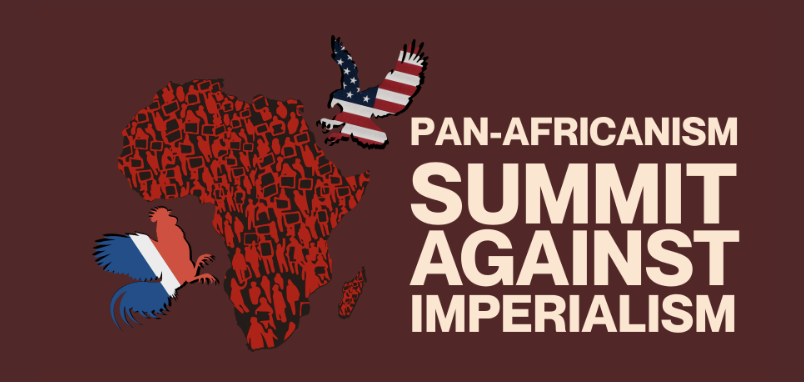
At the same time, Kenya has also been positioned as a diplomatic platform for imperial coordination, including hosting the Africa France Summit in 2026, a gathering that reflects the continued attempts of European imperialism to reorganise its influence on the continent under new political language, while preserving old relations of dependency.
These two realities are not separate. They express a single condition: Kenya is being actively integrated into competing but interconnected imperialist frameworks, all of which seek to shape its political and economic trajectory.
But history does not end there.
Kenya is also a site of rising popular consciousness, deepening class contradictions, and increasing resistance from workers, peasants, students, and the urban poor. Beneath the surface of formal political stability, the pressures of inequality, land question, unemployment, and state repression continue to accumulate.
It is within this contradiction that the role of the Communist Party Marxist Kenya emerges with clarity and necessity.
The task before the CPMK is not symbolic participation in global discourse. It is the practical organisation of revolutionary forces within this concrete national reality, while linking them to the international anti imperialist and anti fascist front.
This means:
Exposing and opposing the militarisation of Kenyan territory by foreign powers
Opposing the political subordination of Africa through diplomatic and economic summits that serve imperial interests
Building mass political education rooted in the realities of workers and peasants
Strengthening organisational structures capable of transforming discontent into disciplined political force
Uniting all anti imperialist currents in Kenya into a coherent force oriented towards national democratic revolution
The National Democratic Revolution is not an abstract stage. It is the concrete task of breaking neocolonial domination, dismantling imperialist control, and establishing a sovereign, people centred political order rooted in the working class and peasantry.
Comrades,
The global situation we have analysed is not separate from our national conditions. It is expressed here, in our soil, in our economy, in our political institutions, and in the everyday life of our people.
Therefore, the struggle against imperialism abroad and the struggle for liberation in Kenya are one and the same struggle.
The CPMK stands within this contradiction not as an observer, but as an organiser.
Not as a commentator, but as a builder of forces.
Not as a witness to history, but as an active agent in its transformation.
Let it be clear.
The imperialist system is in crisis. Its wars are expanding. Its contradictions are deepening. But history does not move by crisis alone. It moves by organisation.
And it is in this moment, in this country, and in this struggle, that the responsibility falls upon us to turn crisis into opportunity, and resistance into organised power.
Forward towards the strengthening of the anti imperialist and anti fascist front.
Forward towards the organisation of the masses.
Forward towards the victory of the National Democratic Revolution.
End